The Four Great Styles of American Barbecue
One country, four smoke traditions — and the wood, meat, and sauce that define each.
AIAI-assisted article, reviewed by the BBQ Atlas editorial team.
Central Texas: brisket over post oak
Central Texas barbecue is built on beef brisket and restraint. The rub is usually just salt and coarse black pepper, the wood is post oak, and the smoke runs low and slow for the better part of a day until the fat renders and a dark, peppery bark forms. Sauce, when it appears at all, sits on the side — a brisket this good is not asking for help. The region's other signatures trace back to the German and Czech meat markets of towns like Elgin and Lockhart: house-made sausage sold by the ring, and, increasingly, the giant beef plate rib. To see how it plays out today, browse the Austin BBQ guide, then dig into the best brisket and best sausage rankings.
Kansas City: everything, with a thick sweet sauce
Kansas City is the great generalist of American barbecue. Its pitmasters smoke everything — brisket, ribs, pulled pork, turkey, ham, sausage, chicken — over a blend of hickory and oak, and finish it with the thick, sweet, tomato-and-molasses sauce most Americans picture when they hear the words 'barbecue sauce.' The city's signature bite is the burnt end: the caramelized, bark-heavy point of the brisket, once given away as scraps and now a delicacy in its own right. KC is also a rib town, so line up a plate of the city's best ribs while you are there. The full lineup lives in the Kansas City BBQ guide.
Memphis: ribs, dry or wet, and the pork sandwich
Memphis is pork country, and it settles one great debate two ways. Ribs come dry — coated in a paprika-and-spice rub and served without sauce — or wet, basted in a thin, tangy, tomato-based sauce. The everyday plate is a chopped or pulled pork shoulder sandwich topped with slaw, smoked over hickory, and often finished with a fistful of barbecue nachos on the side. The result is sweeter and tangier than Texas, and more sauce-forward than the Carolinas. Start with the Memphis BBQ guide to find your pit.
The Carolinas: whole hog and a thinner sauce
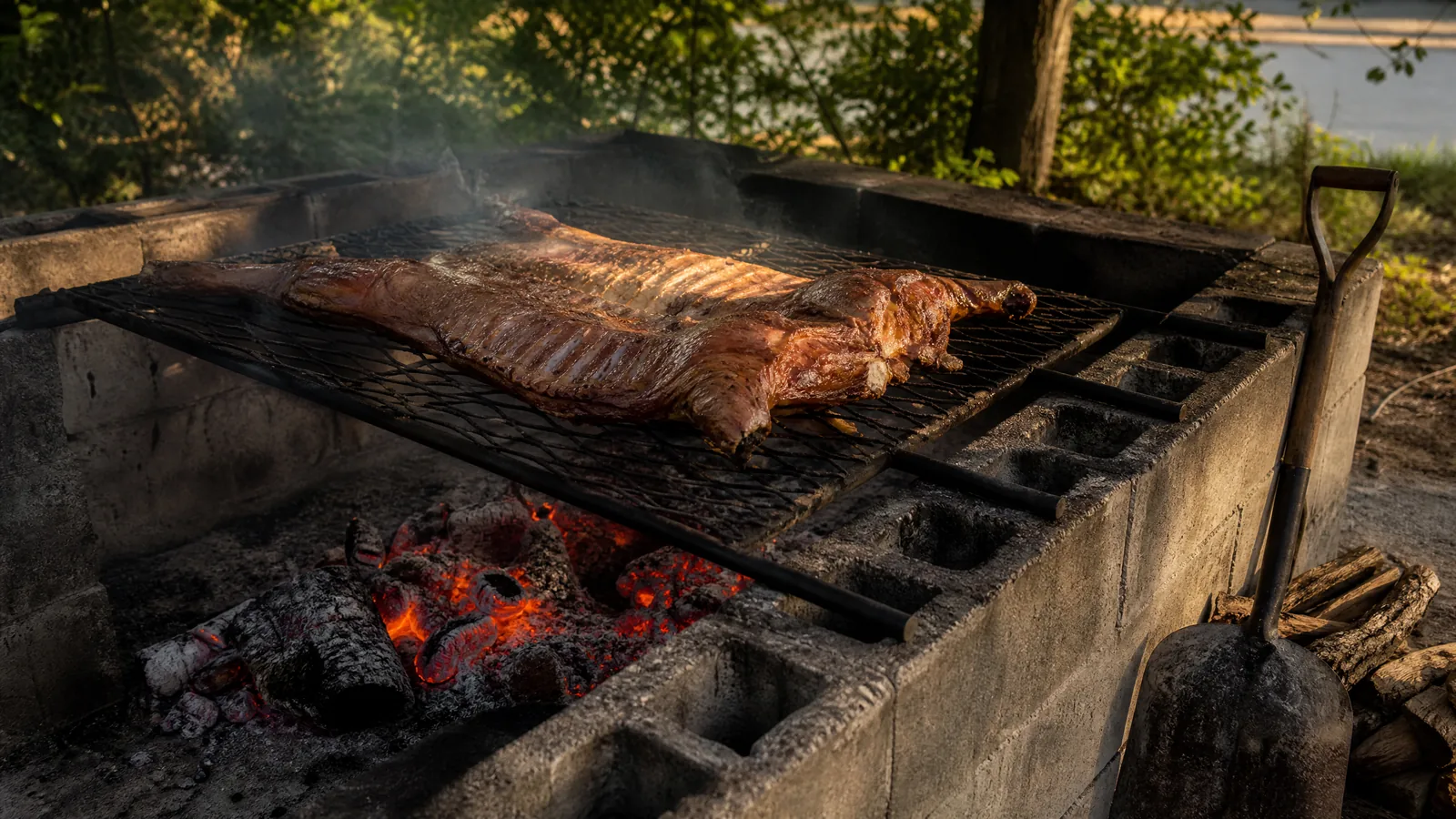
Carolina barbecue means the whole hog, cooked slowly over coals until the meat is pulled and chopped together. The sauces are thin and sharp rather than thick and sweet. Eastern North Carolina leans on a vinegar-and-pepper sauce; the South Carolina midlands are famous for a mustard-based 'Carolina gold'; and hash over rice is the Lowcountry side you will not find anywhere else. It is the oldest and most communal of the four traditions. The Charleston and Lowcountry guide is where the Atlas covers it.
Tell me your wood and your sauce, and I can usually tell you where you learned to cook.
The quick way to tell them apart
If you only remember one thing from each, remember the pairing of meat and sauce:
- Central Texas — brisket and sausage over post oak; sauce on the side, if at all.
- Kansas City — a little of everything over hickory and oak; thick, sweet tomato sauce, and burnt ends.
- Memphis — pork ribs (dry or wet) and the pulled-pork sandwich over hickory.
- The Carolinas — whole hog with a thin vinegar-pepper or mustard sauce, plus hash and rice.
None of these traditions is trying to be the others, and that is the point. Once you can name the wood, the meat, and the sauce, every barbecue joint in the country starts to tell you where it comes from. From there, the BBQ Atlas city guides take you the rest of the way — to the pits, the pitmasters, and the plates worth planning a trip around.
Explore the four styles on the Atlas
- Austin & Central TexasBrisket, beef ribs, and market sausage over post oak.
- Kansas CityBurnt ends, ribs, and thick sweet sauce on everything.
- MemphisDry or wet ribs and the classic pulled-pork sandwich.
- Charleston & the LowcountryWhole hog, vinegar and mustard sauces, hash and rice.
- All BBQ citiesEvery city the BBQ Atlas covers, in one place.
The best BBQ in America, in your inbox
New pit reviews, city guides, and road-trip routes across the BBQ belt — sent when they matter, never spam.
Yes, email me BBQ Atlas updates. I can unsubscribe anytime via the link in every email.