
The Lowcountry's Signature: Whole Hog Barbecue
One pig, a bed of coals, an overnight fire, and a tradition built to feed a crowd.
AIAI-assisted article, reviewed by the BBQ Atlas editorial team.
Why whole hog is different
Most barbecue traditions start with a cut. Whole hog starts with the animal. Shoulders, hams, belly, loin, and the small pockets of meat around the bones all cook together, which means the finished tray has several textures and levels of richness at once. When the meat is pulled and chopped, those parts mingle instead of being served separately. That mixture is the point: a bite can carry soft shoulder, richer belly, smoke-darkened edges, and bits of skin or bark in the same forkful. For the broader Charleston picture, the city guide shows how this old Lowcountry method sits alongside newer barbecue rooms and transplanted regional styles.
The overnight pit
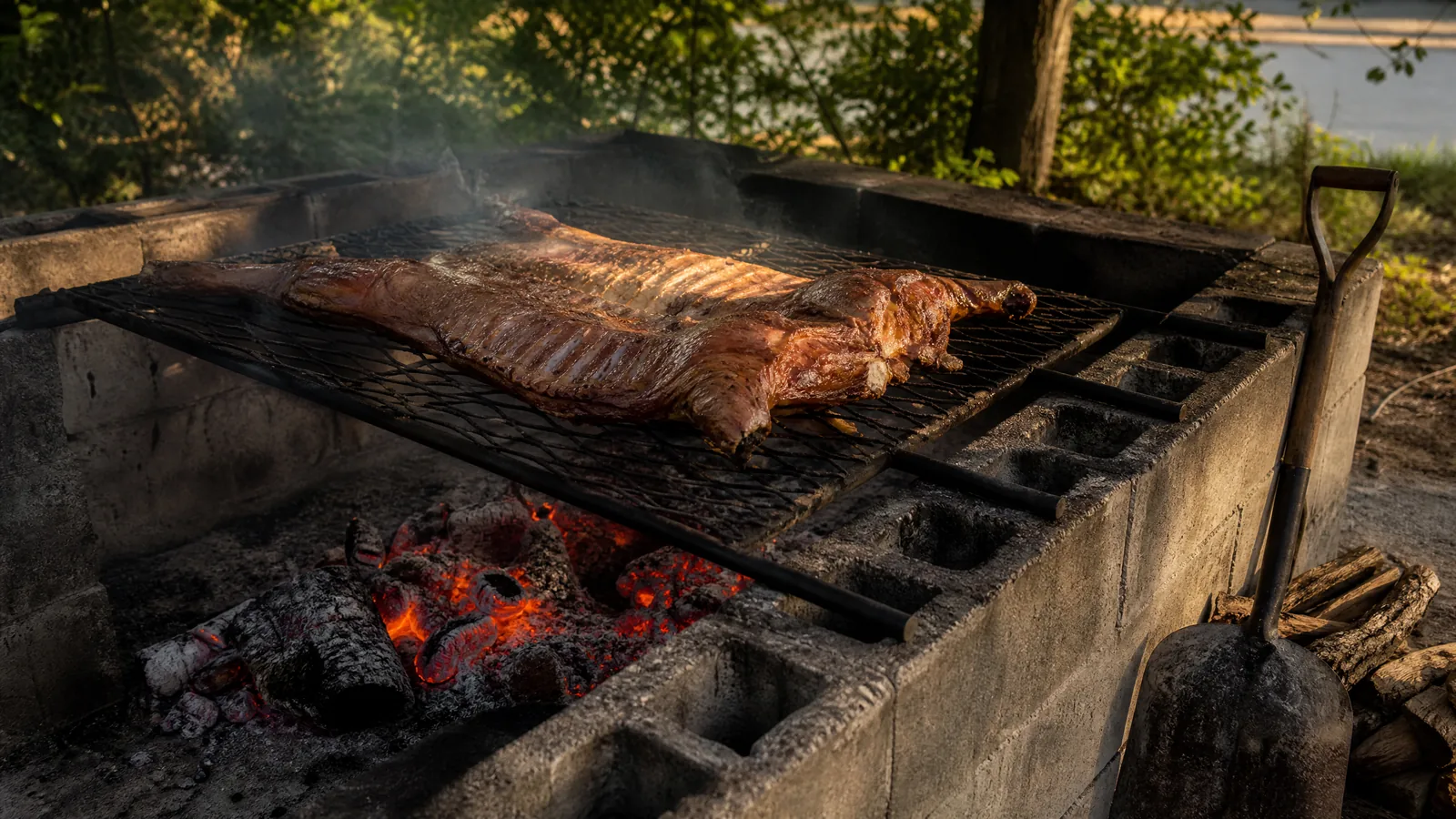
Traditional whole hog barbecue asks the cook to manage a long, steady bed of heat rather than chase a dramatic blast of smoke. Coals are built and tended through the night so the pig cooks gradually from one end to the other. The job is physical and repetitive: watch the hot spots, feed the fire, protect the leaner sections, and keep the cook moving without scorching the exterior. This is why whole hog remains inseparable from pit craft. At Scott's Bar-B-Que in Hemingway, the style is tied directly to that wood-and-coal tradition, while Rodney Scott's brings the same whole-hog vocabulary into Charleston.
Pull, chop, and mix
Once the hog is done, serving becomes another stage of the process. The meat is pulled from across the carcass, chopped to even out the texture, and mixed so that no one section dominates the pan. That blending is what separates great whole hog barbecue from a pile of generic pulled pork. You should taste the animal as a whole: lean meat for structure, fatty meat for richness, browned edges for intensity, and enough smoke to frame everything without burying it. The final texture should be loose and juicy rather than pasty, with enough irregularity to remind you it came from several parts of the pig.
Two sauces, two kinds of brightness
The meat is only half the Lowcountry equation. A thin vinegar-pepper sauce cuts through pork fat with acidity and heat, sharpening the smoky, rich meat rather than coating it. South Carolina's mustard tradition goes in another direction: tangy, savory, and brighter in color, with more body but still enough acidity to keep the pork lively. Neither sauce should erase the fire or the hog. Think of them as seasoning after the cook. Our guide to mustard sauce barbecue in Charleston shows how that gold-colored branch of the Carolina family fits the plate.
Whole hog barbecue is a fire you tend all night for a meal meant to be shared.
Where the tradition lives now
The clearest way to understand whole hog is to taste it where the method still drives the menu. Charleston's barbecue scene also includes places such as Lewis Barbecue, which brings a different regional barbecue language into the city and makes the contrast useful: whole hog is about mixed pork, coal management, and thin finishing sauce rather than a single beef cut and heavy bark. If you are building a tasting day, downtown Charleston is an easy base, but the tradition makes the most sense when you see it as part of the larger map of American barbecue styles. The Lowcountry signature is not merely pork on a plate; it is the combined result of animal, fire, time, chopping, and a sharp sauce that wakes the whole thing up.
Explore more on the Atlas
- Charleston BBQ guideEvery pit, area, and dish we cover around Charleston.
- Best whole hog in CharlestonWhere to taste the Lowcountry's signature barbecue tradition.
- Best mustard sauce BBQ in CharlestonA guide to South Carolina's tangy gold sauce.
- Rodney Scott's BBQWhole-hog barbecue in Charleston from one of the tradition's best-known modern torchbearers.
- Scott's Bar-B-Que, HemingwayA destination for the wood-and-coal whole-hog tradition beyond Charleston.
- The four great styles of American barbecueSee where Carolina whole hog fits on the national barbecue map.
The best BBQ in America, in your inbox
New pit reviews, city guides, and road-trip routes across the BBQ belt — sent when they matter, never spam.
Yes, email me BBQ Atlas updates. I can unsubscribe anytime via the link in every email.