A First-Timer's Guide to Austin Barbecue
What to order, when to show up, and how to taste more than one great pit in a single trip.
AIAI-assisted article, reviewed by the BBQ Atlas editorial team.
Start with the three essentials
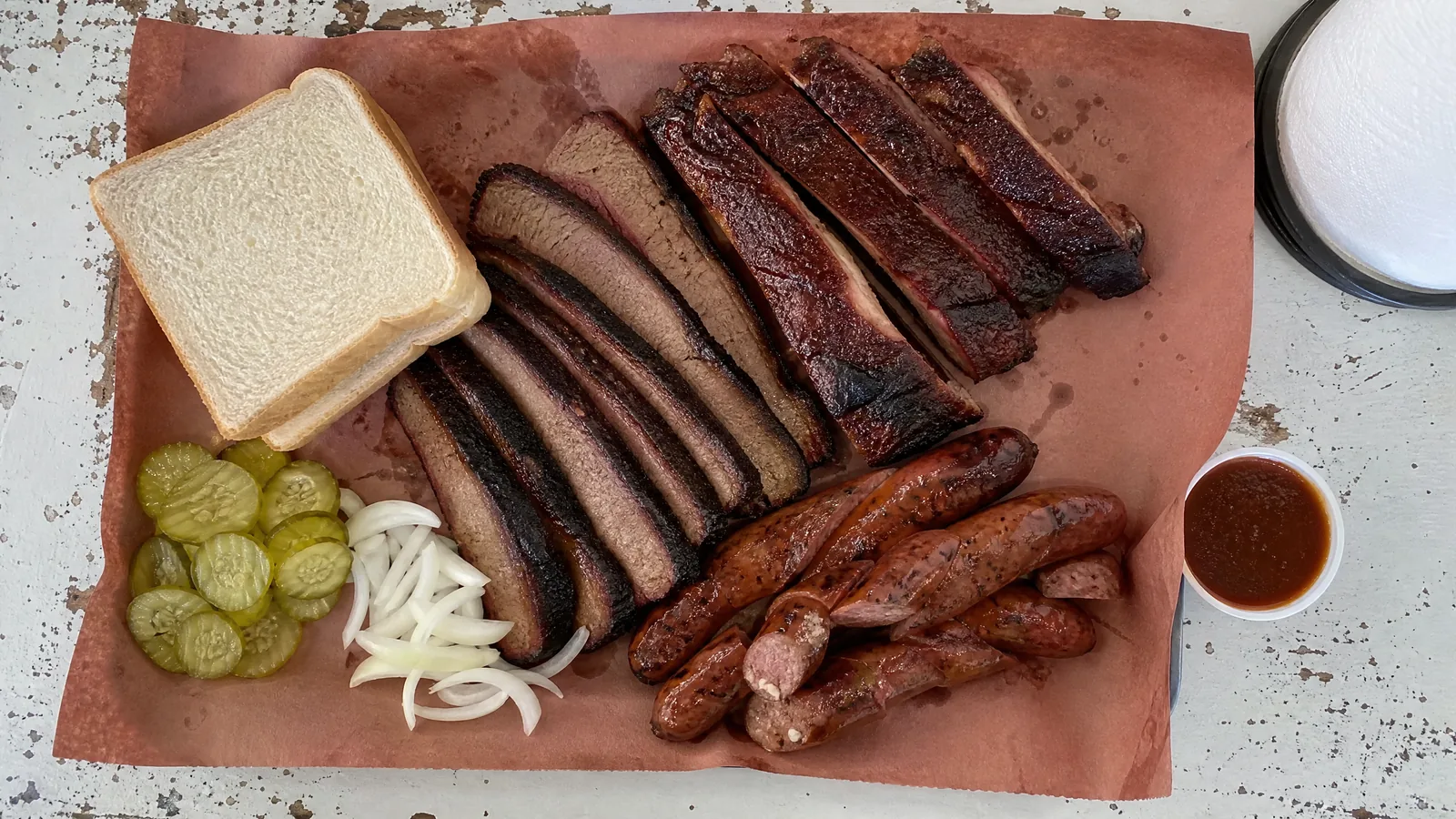
For a first Austin barbecue plate, think in three lanes: brisket, beef rib, and sausage. Brisket is the baseline, the cut that tells you how a pit handles smoke, fat, bark, and tenderness. Order a few slices from the point and flat if both are available, then use our best brisket in Austin guide to see where the city’s strongest examples fit. A beef rib is the splurge: huge, rich, peppery, and best shared. The best beef ribs in Austin list is useful when that dramatic first bite is part of the plan. Sausage is the sleeper order. Central Texas meat-market traditions make a good link more than filler, so leave room for one from the best sausage in Austin guide.
Order less than you think
The biggest first-timer mistake is treating a barbecue counter like a one-stop dinner. Austin is better as a tasting circuit. Split a half-pound of brisket, one sausage link, and a side or two between two people before adding anything else. If you want a beef rib, make it the shared centerpiece rather than another individual order. The goal is to leave the first pit satisfied but mobile. That matters if you plan to compare more than one smokehouse, especially around the Austin barbecue map. Bread, pickles, onions, sauce, and sides can fill the gaps, but the meat should drive the itinerary.
Go early and respect the sellout
Austin barbecue still runs on the logic of the pit, not the logic of an all-day restaurant kitchen. Many places cook a finite amount, serve it when it is ready, and stop selling a cut when it is gone. For a first trip, earlier is safer. That is especially true when a specific item matters more than simply eating somewhere good. Franklin Barbecue is the classic example of a meal people plan around rather than casually drop into. La Barbecue belongs on the same kind of serious tasting itinerary. Build buffer into the day, keep a backup option, and do not assume the full menu will still be waiting late in service.
Use the city for range
You do not need to leave Austin to understand why Central Texas barbecue matters. In-town stops make it easy to compare approaches without burning an afternoon in the car. East Austin is a natural zone for smokehouse hopping, while downtown Austin gives visitors a convenient base near hotels, bars, and other stops. Terry Black's Barbecue is useful for first-timers who want the full visual experience of trays, big cuts, and a broad menu without turning the meal into a day-long road trip. City pits are where you learn the vocabulary quickly: bark, rendered fat, pepper, smoke, snap, and the difference between a side dish you enjoy and one that steals room from the meat.
The best first barbecue order is the one that leaves room for the next pit.
Then drive out and see where the style came from
Once you understand the city version, the next move is a short road trip into the towns that shaped Central Texas barbecue. Lockhart is the obvious first destination because it lets you experience the older meat-market rhythm: straightforward ordering, smoke-forward meats, sausage with deep local roots, and a sense that barbecue is part restaurant and part butcher-counter tradition. The contrast is the point. Austin presents the style through busy urban institutions and newer restaurants; the surrounding towns make the lineage easier to see. If you are trying to understand how this region fits beside Kansas City, Memphis, and the Carolinas, the four styles of American barbecue gives you the national frame before or after the drive.
A simple first-day game plan
Make the first meal brisket-focused and arrive early enough that you are not choosing from leftovers. Split the plate. Add sausage, and only add a beef rib if everyone at the table wants to share it. For the second stop, change the assignment: if the first pit excelled at brisket, use the next one for sausage, ribs, or sides. Keep water in the car, do not schedule meals back-to-back with no walking time, and resist the urge to chase every famous name in one day. Two strong stops, eaten thoughtfully, will teach you more than four rushed ones. On a second day, head toward the country and let the older barbecue towns reset the pace.
Explore more on the Atlas
- Austin BBQ guideEvery pit, area, and dish we cover in Austin.
- Best brisket in AustinThe essential first order, ranked.
- Best sausage in AustinCentral Texas market-style links to seek out.
- Best beef ribs in AustinThe big shared order for a first barbecue trip.
- BBQ around LockhartA first road trip into Central Texas barbecue country.
- The four great styles of American barbecueWhere Central Texas fits nationally.
The best BBQ in America, in your inbox
New pit reviews, city guides, and road-trip routes across the BBQ belt — sent when they matter, never spam.
Yes, email me BBQ Atlas updates. I can unsubscribe anytime via the link in every email.