The Best BBQ in Charleston: The Essential Joints
The whole-hog torchbearers, the modern smokehouses, and the Lowcountry flavors worth crossing town for.
AIAI-assisted article, reviewed by the BBQ Atlas editorial team.
What Charleston barbecue tastes like
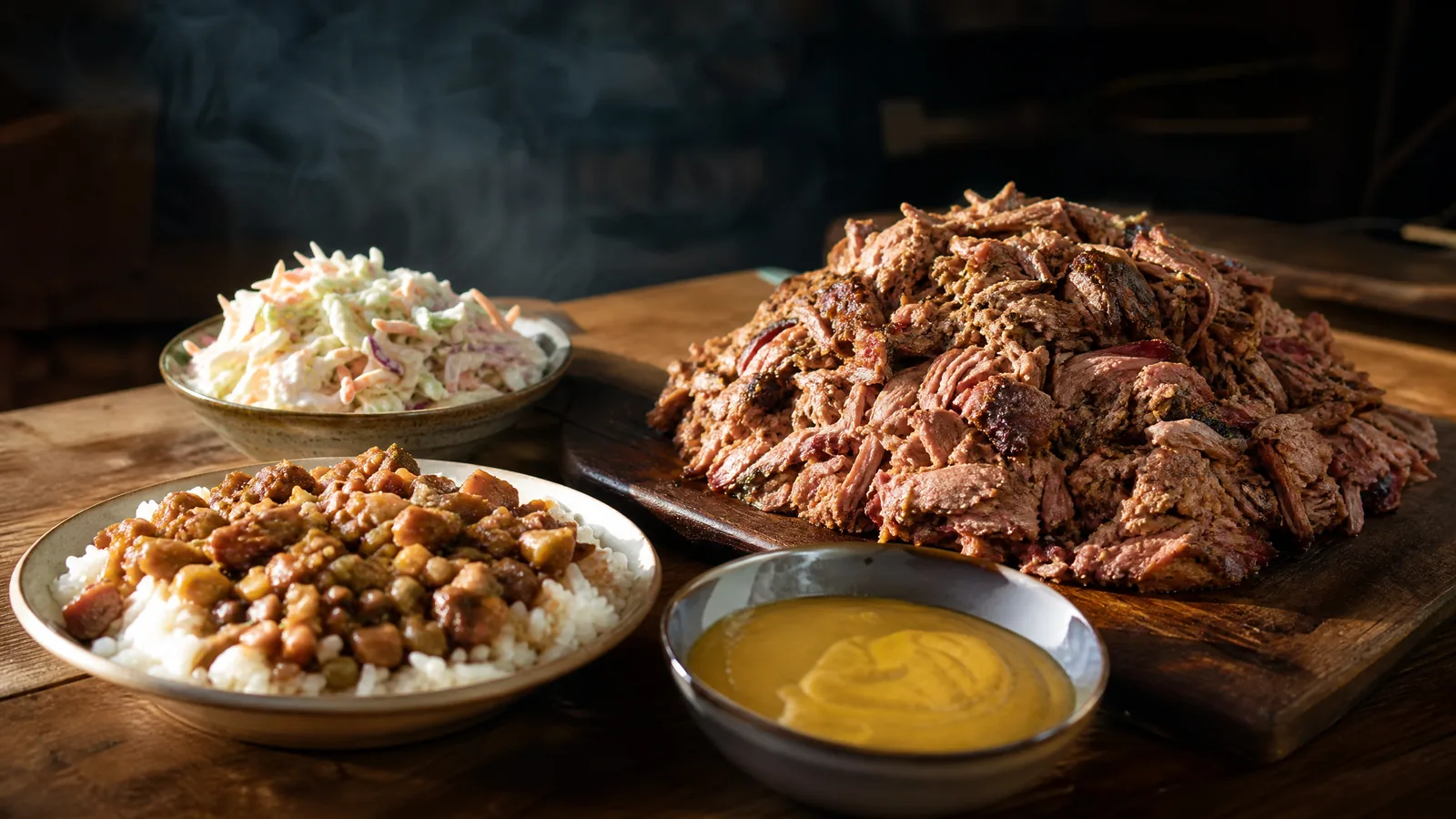
Charleston belongs to a broader South Carolina barbecue landscape where pork comes first and sauce geography matters. Whole hog and pulled pork are central reference points, while the state’s mustard-based sauce adds a tangy, savory-sweet counterpoint to smoke and rendered fat. If you want the national context first, our guide to the four great styles of American barbecue shows how Carolina whole-hog traditions differ from the beef-heavy approach in Texas and the sweeter, broader menus of Kansas City. Around Charleston, the best meals make those regional roots feel immediate: chopped or pulled pork, smoke worked deep into the meat, and sauces that sharpen rather than hide the pit.
The whole-hog standard
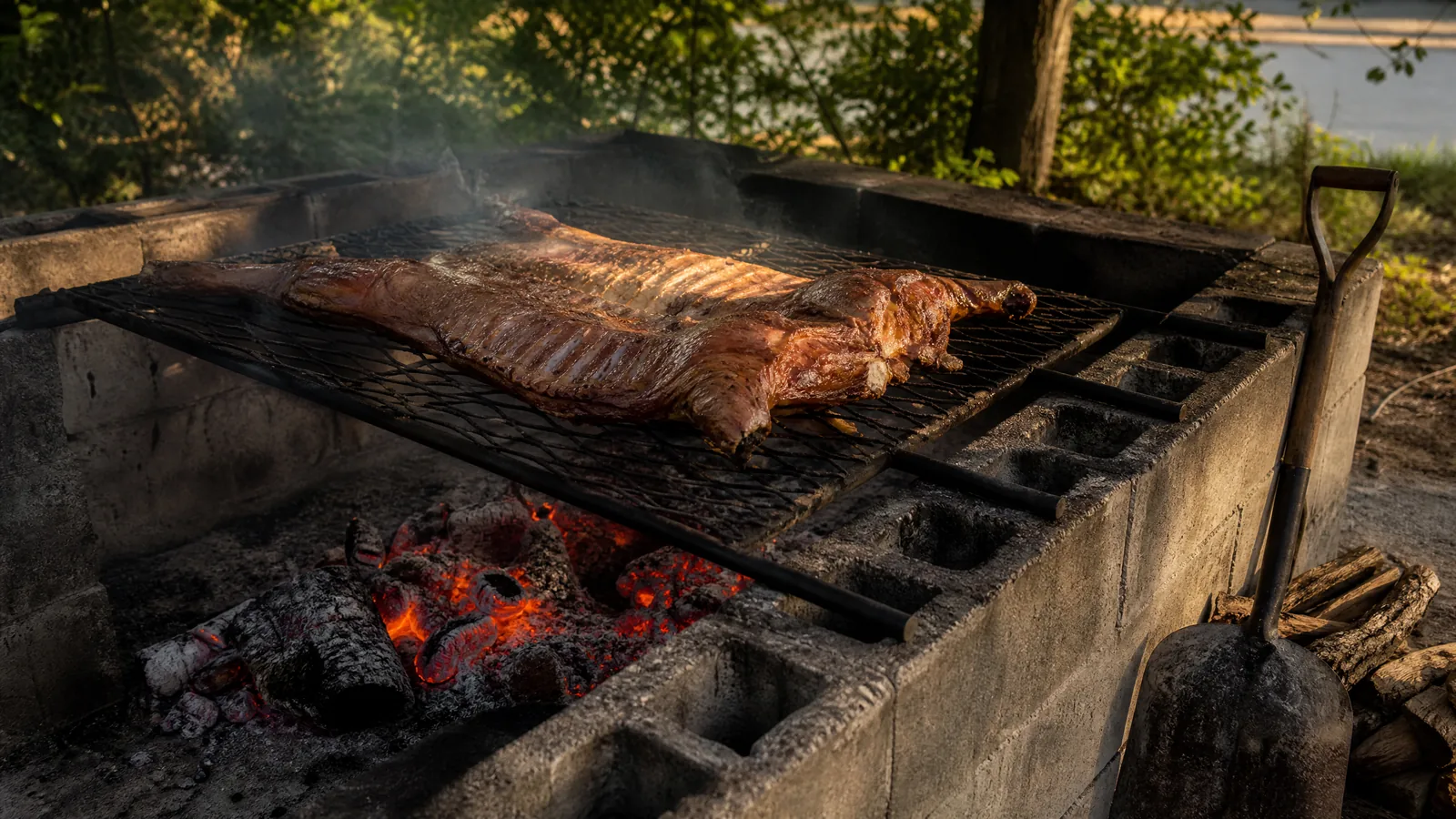
For the clearest expression of Lowcountry whole-hog barbecue, start with Rodney Scott’s BBQ. The method is built around cooking the entire hog over live coals, then pulling and mixing meat from across the animal so leaner and richer cuts land in the same serving. That balance is the point: smoke, fat, pork, and a little tang working together rather than one cut carrying the plate. It is the Charleston stop that most directly connects the city to the whole-hog tradition, and it makes a useful baseline before exploring more modern interpretations. Pay attention to texture as much as smoke: a good whole-hog plate should give you tender meat, richer pockets of fat, and bits of exterior character in the same forkful.
The modern counterpoint
Lewis Barbecue approaches Charleston from a different barbecue lineage, with brisket and other Texas-influenced meats playing a larger role. That contrast is exactly why it belongs on an essential Charleston list. A strong barbecue city is more interesting when its best restaurants do not all chase the same target, and Lewis adds another smoke profile, another slicing style, and another reason to think beyond pulled pork. Pair it with a whole-hog stop and the city’s range becomes obvious: Charleston can honor its Carolina roots while still making room for a modern, meat-market style smokehouse. For a group, this is also a useful place to order across cuts and compare bark, fat render, sausage, and sides instead of building the table around a single regional specialty.
A flexible neighborhood favorite
Home Team BBQ occupies the middle ground between tradition and a more expansive neighborhood-barbecue experience. Pork still matters, but the appeal is the broader plate: smoked meats, wings, sandwiches, sides, and sauces built for a group that wants to sample widely. Its downtown location also makes it an easy addition to a day built around the Downtown Charleston barbecue scene. For travelers who want one stop that feels social and unfussy while still taking the smoke seriously, Home Team fills that role better than a narrowly focused destination pit. It is also a smart change of pace after a purist whole-hog meal: instead of repeating the same order, you can widen the table and see how Charleston barbecue functions as casual neighborhood food as well as regional heritage.
The drive that explains the roots
The most instructive barbecue stop tied to Charleston is not in the city at all. Scott’s Bar-B-Que in Hemingway takes you deeper into the rural whole-hog tradition that shaped the region long before Charleston became a national food destination. It is the kind of drive that clarifies what the city’s pitmasters are preserving: hog cooked slowly over coals, chopped or pulled for sandwiches and plates, then sharpened with sauce rather than buried under it. If your Charleston trip is partly about understanding the food rather than simply checking off restaurants, Hemingway gives the story a wider frame. The drive also creates a useful before-and-after comparison: taste the rural expression, then return to Charleston and notice which details the city’s restaurants preserve, polish, or reinterpret.
In the Lowcountry, smoke starts the conversation and sauce tells you where you are.
How to order your way through Charleston
Build your first Charleston barbecue crawl around contrast. Order whole hog or pulled pork at one stop, then try a brisket-driven plate at another. Taste sauces side by side instead of assuming Carolina barbecue has one universal flavor; the mustard-sauce tradition is especially useful for understanding the state’s regional identity. If pork is your priority, compare shoulder meat with whole-hog plates and notice how mixing different parts of the animal changes richness and texture. Do not overload the first tray: split meats, keep sides strategic, and leave room for a second pit. And do not feel obligated to stay on the peninsula. Charleston barbecue is easier to understand as a Lowcountry network than as one downtown checklist, especially when you pair the city core with the wider metro and a drive toward older rural traditions.
Explore more on the Atlas
- Charleston BBQ guideEvery pit, area, and dish we cover around Charleston.
- Best whole hog in CharlestonThe Lowcountry’s defining barbecue tradition.
- Best mustard-sauce BBQ in CharlestonWhere South Carolina’s signature sauce shines.
- Best pulled pork in CharlestonSmoky pork plates and sandwiches to know.
- The four great styles of American barbecueWhere Carolina barbecue fits nationally.
The best BBQ in America, in your inbox
New pit reviews, city guides, and road-trip routes across the BBQ belt — sent when they matter, never spam.
Yes, email me BBQ Atlas updates. I can unsubscribe anytime via the link in every email.