Carolina BBQ, Explained: Whole Hog and a Thinner Sauce
Whole hog, live coals, sharp sauces, and a plate built for feeding a crowd.
AIAI-assisted article, reviewed by the BBQ Atlas editorial team.
The whole hog is the starting point
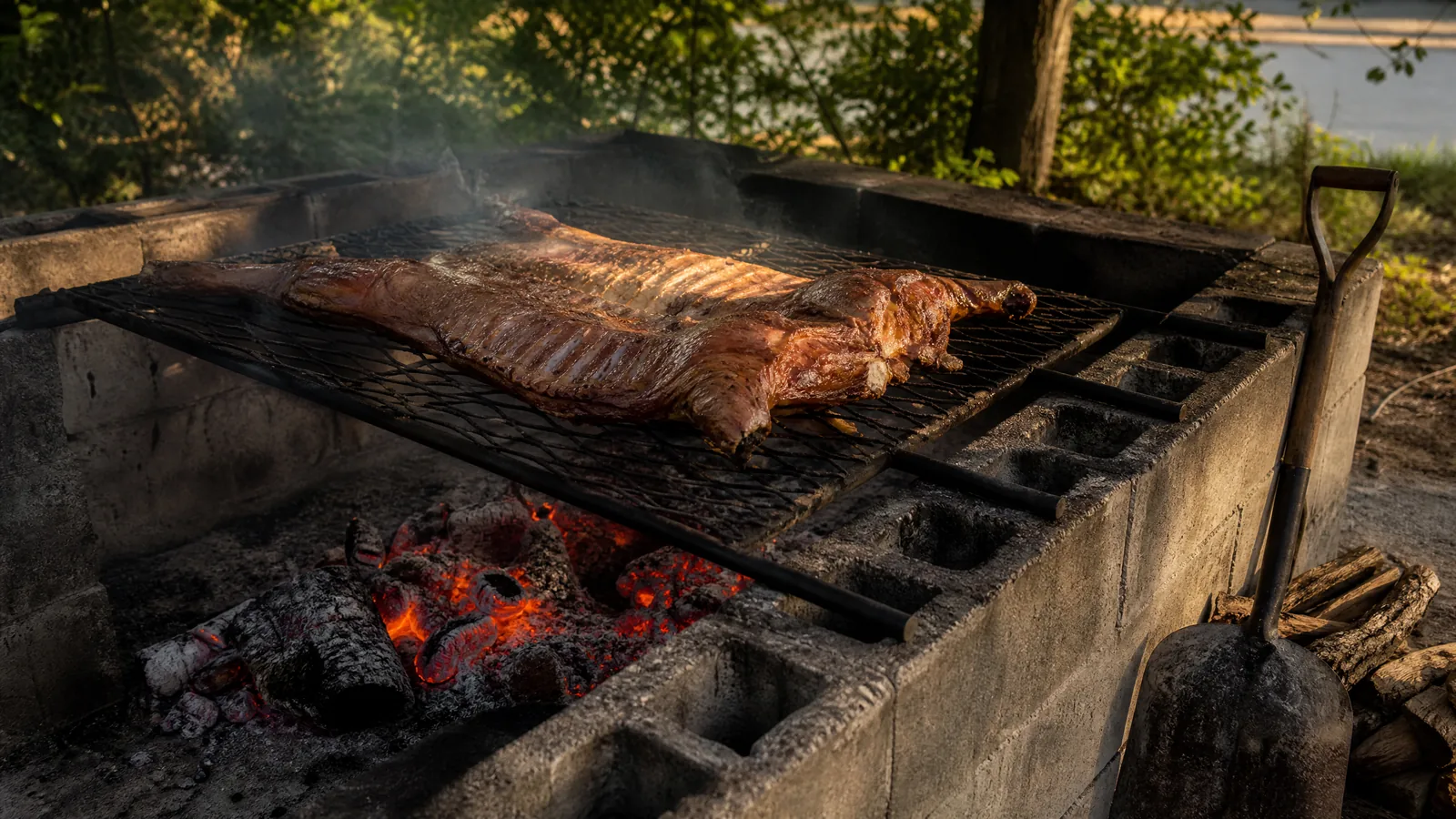
The defining idea is simple and demanding: cook the pig as a whole animal, not as a collection of isolated cuts. Over a long fire, the fatty shoulders, leaner hams, belly, and other parts finish at different rhythms, then meet again when the meat is pulled and chopped together. That mixing is the point. Rich and lean pieces balance each other, smoke runs through the pile, and every serving carries more of the animal than a single sliced cut could. Around Charleston, the best place to understand that logic is through the city's whole-hog barbecue guide and pits such as Rodney Scott's.
Why the sauce stays thin
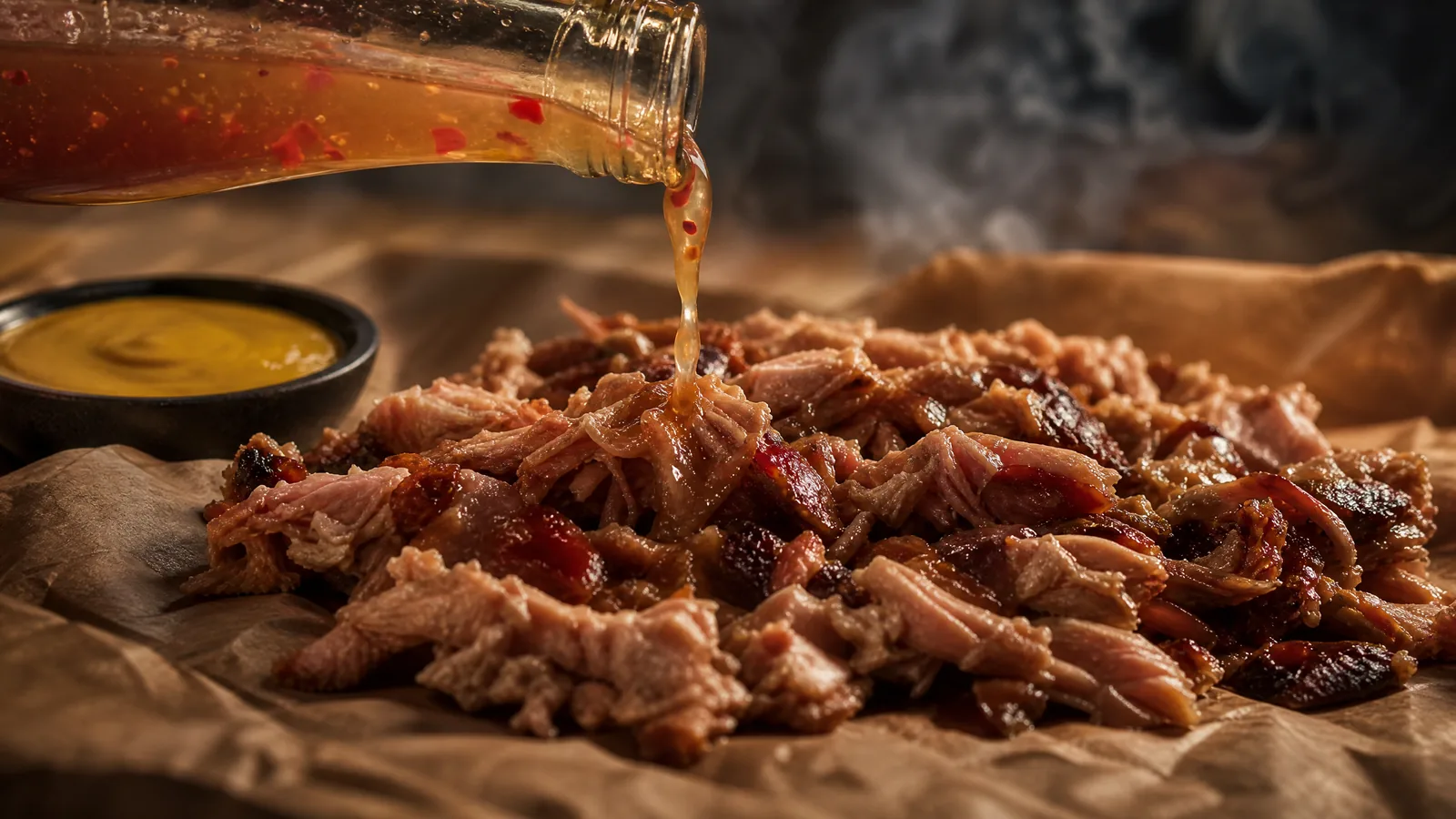
Carolina sauces are built to season pork, not bury it. In eastern North Carolina, the classic model is vinegar sharpened with red pepper: bright, hot, and fluid enough to run into chopped meat. In South Carolina's Midlands, mustard becomes the base for the yellow sauce often called Carolina gold. The two look very different, but the philosophy is similar. Both bring acid, spice, and contrast to fatty pork without turning the plate into a sweet glaze. For the South Carolina side of the story, start with the Atlas guide to mustard-sauce barbecue.
Coals, smoke, and patience
Whole-hog cooking is not just low-and-slow barbecue scaled up. Managing a pig over live coals means tending heat across a wide cooking surface and adjusting the fire as different parts render and soften. The result is meat that can be chopped fine, pulled into strands, or mixed with bits of skin and exterior seasoning. The pit itself becomes part of the rhythm. Scott's Bar-B-Que in Hemingway represents that older, rural South Carolina lineage, while the broader Charleston barbecue guide shows how the tradition carries into the city.
Hash over rice belongs on the same map
South Carolina barbecue plates are not only about pork and sauce. Hash — a deeply cooked, spoonable meat gravy or stew — is one of the region's most distinctive accompaniments, traditionally served over white rice. Its texture and seasoning vary from place to place, but its role is consistent: it turns a barbecue plate into something fuller, softer, and more communal. Rice catches the rich juices; chopped pork brings smoke and texture; mustard or vinegar adds lift. Together they make the plate feel less like a sampler of meats and more like a regional meal with its own internal logic.
The oldest style feels the most communal
Carolina barbecue is often described as the oldest major barbecue tradition in the United States, and the form itself explains why that matters. A whole hog is too much food for one person and usually too much for one household. It makes sense at gatherings, church suppers, fundraisers, family reunions, and community events where a single pit can feed a crowd. The cooking method and the social setting reinforce each other. That is why the style feels less centered on a signature restaurant order and more on the act of sharing chopped pork from the same animal.
Charleston is a crossroads, not a closed box
Charleston gives visitors a useful entry point because the city sits near several Southern barbecue currents at once. Whole hog and mustard sauce are core Carolina references, but the modern city also welcomes other smokehouse traditions. Lewis Barbecue, for example, brings a Central Texas point of view into Charleston's barbecue landscape, making the contrast easy to taste: sliced beef and restrained seasoning on one side, chopped pork and sharper sauces on the other. The downtown Charleston area guide helps frame that mix geographically.
A Carolina pit feeds the table first and the individual plate second.
How Carolina fits the national map
Put beside the country's other major traditions, Carolina barbecue stands out for what it does not prioritize. It is not built around the perfect brisket slice, and it does not depend on a thick, sweet finishing sauce. Its center is pork, the live fire beneath it, and a thin seasoning that keeps the meat tasting like itself. That is the larger logic behind the style. For a side-by-side comparison with Central Texas, Kansas City, and Memphis, the Atlas guide to the four great styles of American barbecue puts the traditions on one map.
Explore more on the Atlas
- Charleston BBQ guideEvery pit, area, and dish we cover around Charleston.
- Best whole hog in CharlestonWhere to taste the region's defining cooking method.
- Best mustard-sauce BBQ in CharlestonA guide to South Carolina's tangy yellow sauce tradition.
- Rodney Scott's BBQA Charleston stop for whole-hog barbecue.
- The four great styles of American barbecueSee how Carolina compares with Texas, Kansas City, and Memphis.
The best BBQ in America, in your inbox
New pit reviews, city guides, and road-trip routes across the BBQ belt — sent when they matter, never spam.
Yes, email me BBQ Atlas updates. I can unsubscribe anytime via the link in every email.