Austin's Signature: What Makes Central Texas Brisket Different
The cut, the bark, the smoke, and the slow render behind Austin's defining barbecue plate.
AIAI-assisted article, reviewed by the BBQ Atlas editorial team.
Start with the whole packer
Central Texas brisket begins with the whole packer, which contains two muscles that behave differently in the smoker. The flat is leaner, tighter-grained, and easier to dry out. The point sits above it with more intramuscular fat and connective tissue, so it eats richer and softer when the cook is right. A great pit has to bring both muscles to the table at the same time: the flat tender without crumbling, the point lush without turning greasy. That balancing act is why brisket is the defining test of the region and why our best brisket in Austin list matters more than a simple roll call of smokehouses.
Bark is seasoning, smoke, and time
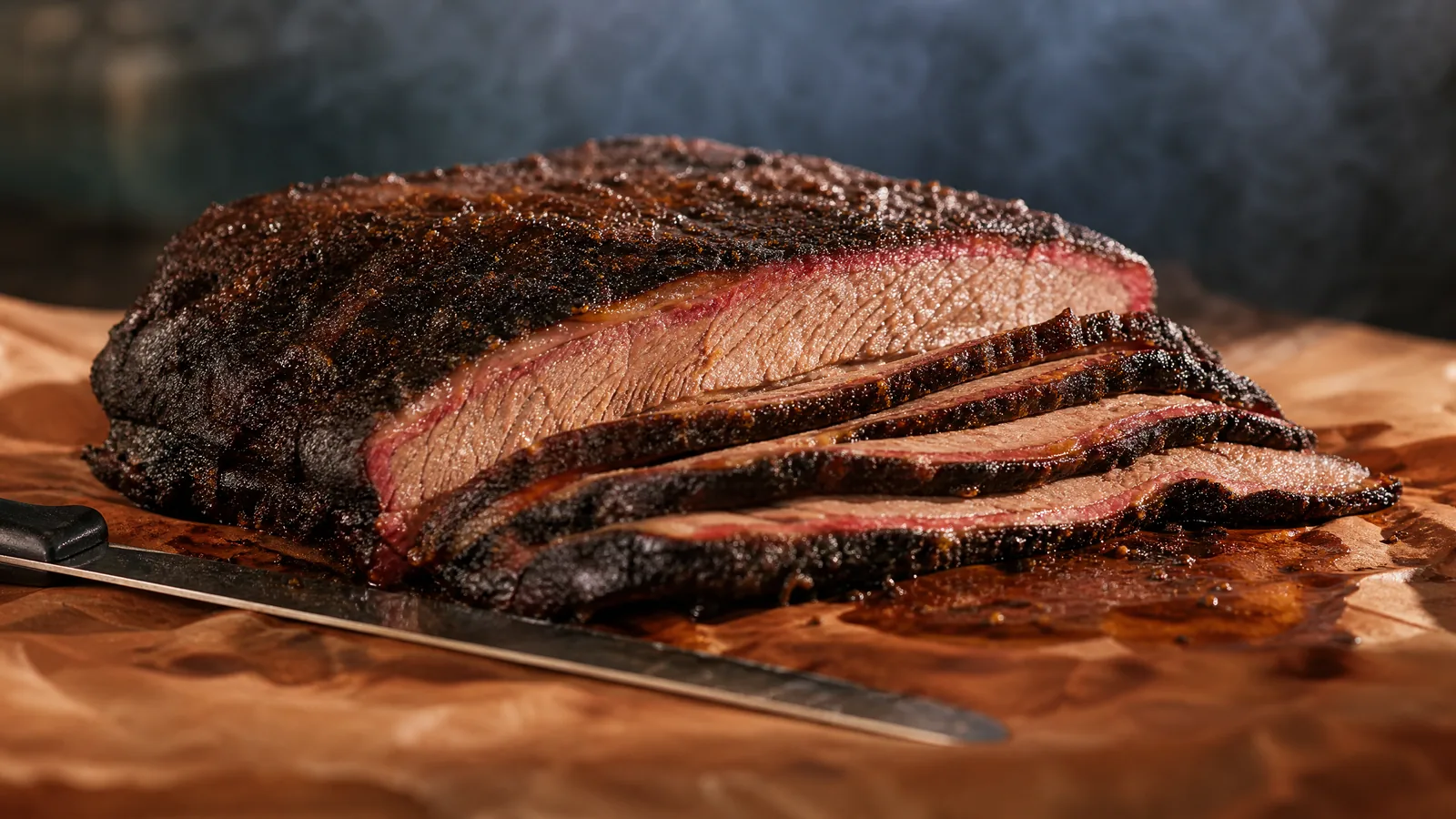
The classic Central Texas exterior is dark, rugged, and pepper-forward. Salt and coarse black pepper do the heavy lifting, while smoke, rendered fat, and hours of heat turn the surface into bark. The flavor should be beef first, seasoning second, smoke third — not the other way around. That restraint is part of the larger regional logic described in the four great styles of American barbecue. At Franklin Barbecue, brisket is the obvious place to study the style: look at the contrast between the nearly black bark and the moist interior, then taste how much complexity comes from such a short ingredient list.
Why post oak matters
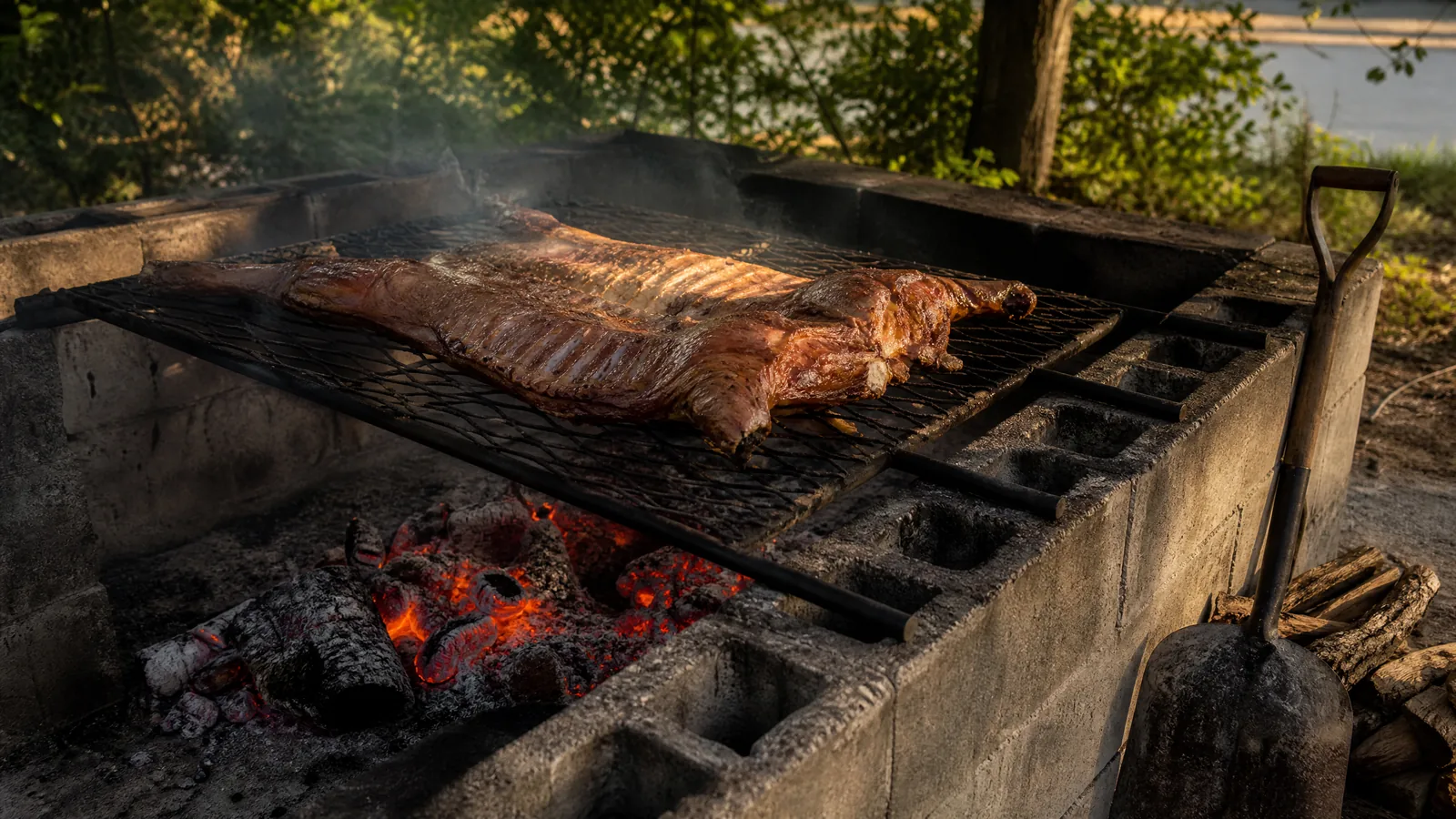
Post oak is central to the Austin and Central Texas profile because it gives the cook a steady, relatively clean wood fire without overwhelming the beef. The goal is not to make brisket taste like a campfire. Good smoke supports the meat with a savory, dry-wood depth and helps build color over the long cook. Too much dirty smoke turns the bark acrid; too little fire management leaves the meat flat. That makes the pit itself part of the recipe. You can taste a polished version of that balance at La Barbecue, where brisket sits alongside the city's equally dramatic beef ribs.
The long render
Brisket is ready because of texture, not because a clock says so. Through the cook, collagen softens and fat renders, turning a dense working muscle into something that bends, pulls, and melts without collapsing. The best slices hold together when lifted but separate with a gentle tug. Fat should look translucent and softened rather than chalky or waxy. The lean flat should remain moist on its own; the point should feel rich, not slick. Rest matters too, because cutting immediately can spill the juices the cook spent all day managing. This is the part of brisket that rewards patience most: the final texture comes from the whole sequence, not one magic temperature.
How to spot great brisket
Use your eyes and fingers before sauce. The bark should be set rather than mushy, with a deep mahogany-to-black crust and visible pepper. A slice should bend over your finger without snapping, yet it should not fall apart like pot roast. Tug gently: the fibers should separate with little resistance. Then taste the fat. Properly rendered brisket has richness built into the meat, which is why Central Texas pits traditionally do not need to bury it. If you want to compare city technique with the old smokehouse tradition beyond Austin, Louie Mueller Barbecue in Taylor is a useful reference point for how deeply beef, pepper, and smoke can define a plate.
Good brisket should taste like beef that spent all day becoming more itself.
Where to eat it
Austin gives you several ways to understand the same regional idea. Start in the city, then drive outward and watch the style change by pit, town, and tradition. Snow's BBQ in Lexington is one of the drive-worthy reference points for Central Texas smoke, while the historic barbecue towns around Lockhart show how closely the style grew from meat-market culture. Back in town, use the full Austin BBQ guide to build a route rather than treating brisket as a one-stop event. Order from both the flat and the point when you can, eat the slices before drowning them in sauce, and pay attention to bark, rendered fat, smoke, and texture. Once those four pieces line up, the style stops seeming simple and starts seeming precise.
Explore more on the Atlas
- Austin BBQ guideEvery pit, area, and dish we cover in Austin.
- Best brisket in AustinOur guide to Austin's signature barbecue cut.
- Best beef ribs in AustinThe other great showcase for Central Texas beef.
- The four great styles of American barbecueWhere Central Texas fits nationally.
- BBQ around LockhartExplore the historic meat-market country south of Austin.
The best BBQ in America, in your inbox
New pit reviews, city guides, and road-trip routes across the BBQ belt — sent when they matter, never spam.
Yes, email me BBQ Atlas updates. I can unsubscribe anytime via the link in every email.