Where to Eat BBQ by Neighborhood in Charleston
A practical Lowcountry barbecue map, from the peninsula to the drive-out pits.
AIAI-assisted article, reviewed by the BBQ Atlas editorial team.
Start downtown for the easiest first pass
If you have one barbecue meal and want the least complicated plan, begin with the Charleston BBQ guide and stay near the peninsula. The Downtown Charleston area puts several major names within a relatively compact part of the city, making it the best base for visitors who are already walking the historic core. Rodney Scott's BBQ is the clearest first stop for whole-hog pork and the Lowcountry tradition behind it. Nearby, Lewis Barbecue offers a strong counterpoint with a broader smokehouse menu, while Home Team BBQ fits naturally into an evening built around downtown dining and drinks. If you are trying to understand Charleston barbecue rather than simply check off one restaurant, this is the most efficient place to compare styles.
Mount Pleasant: build barbecue into an east-of-the-Cooper day
Treat Mount Pleasant as a route decision rather than a separate barbecue universe. If your day already includes the beaches, waterfront, or time east of the Cooper River, use the area page to see what fits your movement before or after a peninsula meal. Charleston barbecue rewards this kind of planning because the city is spread across bridges and waterways; a short-looking trip on a map can become the defining logistical choice of the afternoon. For a first visit, it usually makes more sense to pair Mount Pleasant sightseeing with one destination meal than to bounce repeatedly back and forth across the river.
West Ashley: a useful western base
The West Ashley side works well when you are staying west of downtown, heading toward the plantations and gardens, or simply want to avoid making every meal a peninsula mission. Think of it as a staging area for a broader Lowcountry barbecue day. You can eat closer to your route, then save the downtown heavy hitters for a dedicated visit when parking, timing, and sightseeing already point you toward the city center. This is also where a split-plate strategy helps: keep lunch modest, then leave room for a second stop later so the day becomes a comparison rather than a single oversized tray.
James Island: pair the pit stop with the coast
For travelers moving toward Folly Beach or the southern side of town, James Island is the natural barbecue planning zone. The important move is sequencing. Eat before the beach rush if barbecue is the priority, or make the meal your return leg instead of crossing the city twice. Charleston's signature flavors travel well across a two-stop day: pulled or chopped pork, sharp vinegar-pepper seasoning, mustard sauce, and sturdy sides give you plenty to compare without ordering the same plate twice. The neighborhood map is most useful here as a way to keep the smoke stop aligned with the rest of your coastal itinerary.
North Charleston and Summerville: think corridor, not detour
The northern side of the metro is best approached as a corridor. If your hotel, airport run, or road trip already brings you through North Charleston or Summerville, use those areas to keep barbecue tied to the direction you are traveling. Do not assume the peninsula has a monopoly on the city's food culture; the wider metro is part of the same Lowcountry eating geography. For travelers driving in from the north or west, this can also be the smarter place for an arrival-day or departure-day meal, freeing your downtown hours for the restaurants and neighborhoods that are hardest to reach once traffic builds.
The drive-out: Hemingway and the rural whole-hog tradition
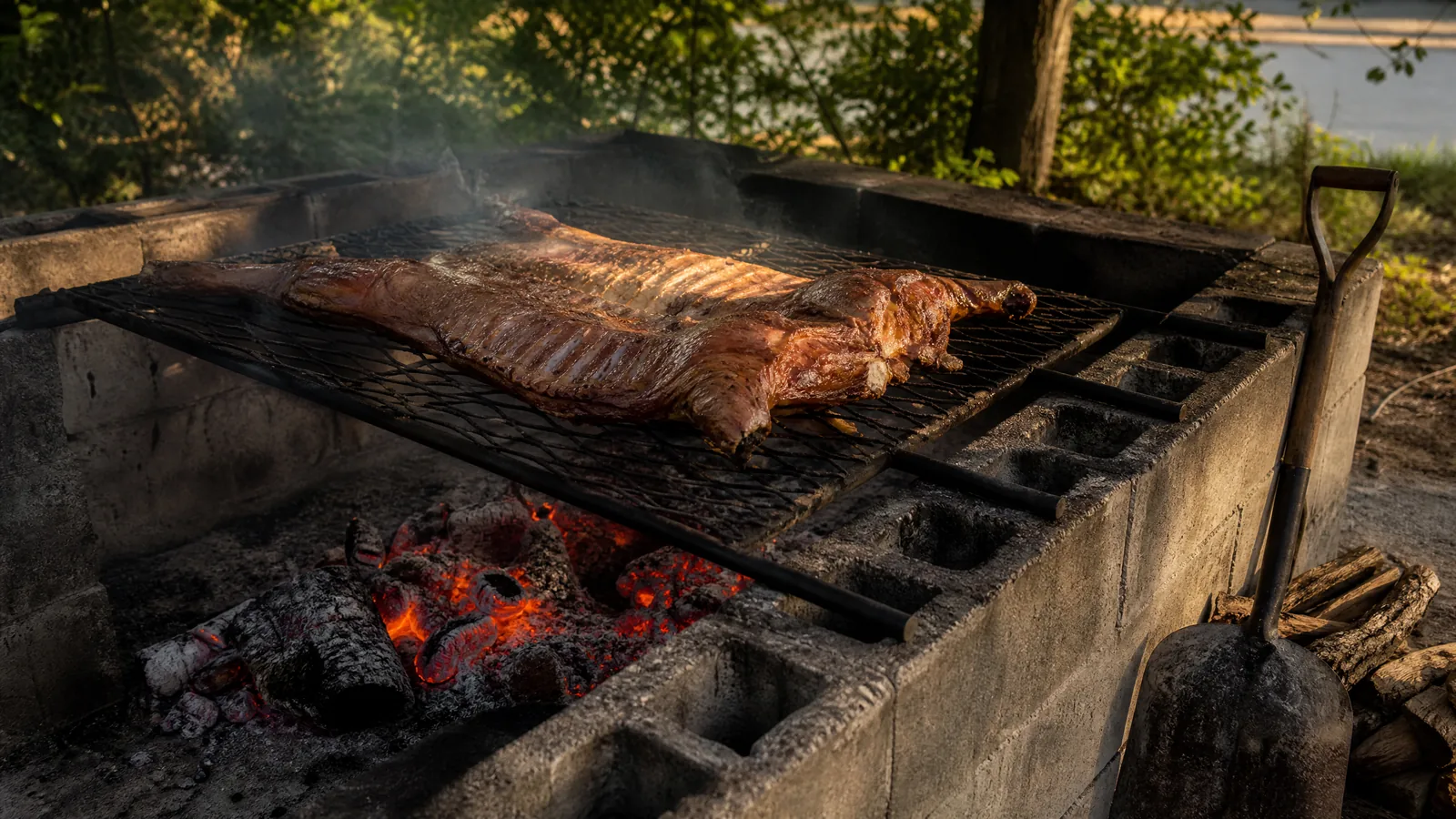
The most important barbecue trip outside Charleston is not another neighborhood at all. It is the drive to Scott's Bar-B-Que in Hemingway, where the Lowcountry whole-hog tradition feels closer to its rural setting. Make it a deliberate outing rather than an add-on. The value is the contrast: city barbecue can be polished, flexible, and built for a full-service day, while the drive-out reminds you that this style grew from pits, coals, hogs, and community cooking long before Charleston became a national dining destination. For the broader regional context, the closing guide below connects Charleston to the other major American barbecue traditions.
- Downtown: best for a first visit and the easiest multi-stop comparison.
- Mount Pleasant: best when your day already runs east of the Cooper River.
- West Ashley: best as a western base or a stop on a broader Lowcountry route.
- James Island: best paired with Folly Beach and the southern side of town.
- North Charleston and Summerville: best for airport, arrival-day, departure-day, or northbound routing.
- Hemingway: best as a dedicated pilgrimage for whole-hog barbecue.
Explore more on the Atlas
- Charleston BBQ guideEvery area, pit, and Lowcountry barbecue guide we cover in Charleston.
- BBQ in North CharlestonPlan barbecue around the northern side of the metro.
- BBQ around SummervilleA route guide for the northwest side of the Charleston area.
- Scott's Bar-B-Que, HemingwayThe drive-out stop for a deeper taste of Lowcountry whole-hog tradition.
- The four great styles of American barbecueSee how Charleston and the Carolinas fit into the national barbecue map.
The best BBQ in America, in your inbox
New pit reviews, city guides, and road-trip routes across the BBQ belt — sent when they matter, never spam.
Yes, email me BBQ Atlas updates. I can unsubscribe anytime via the link in every email.