A First-Timer's Guide to Charleston Barbecue
A newcomer’s playbook for whole hog, thin sauces, hash and rice, and the Lowcountry pits that define the style.
AIAI-assisted article, reviewed by the BBQ Atlas editorial team.
Start with whole hog
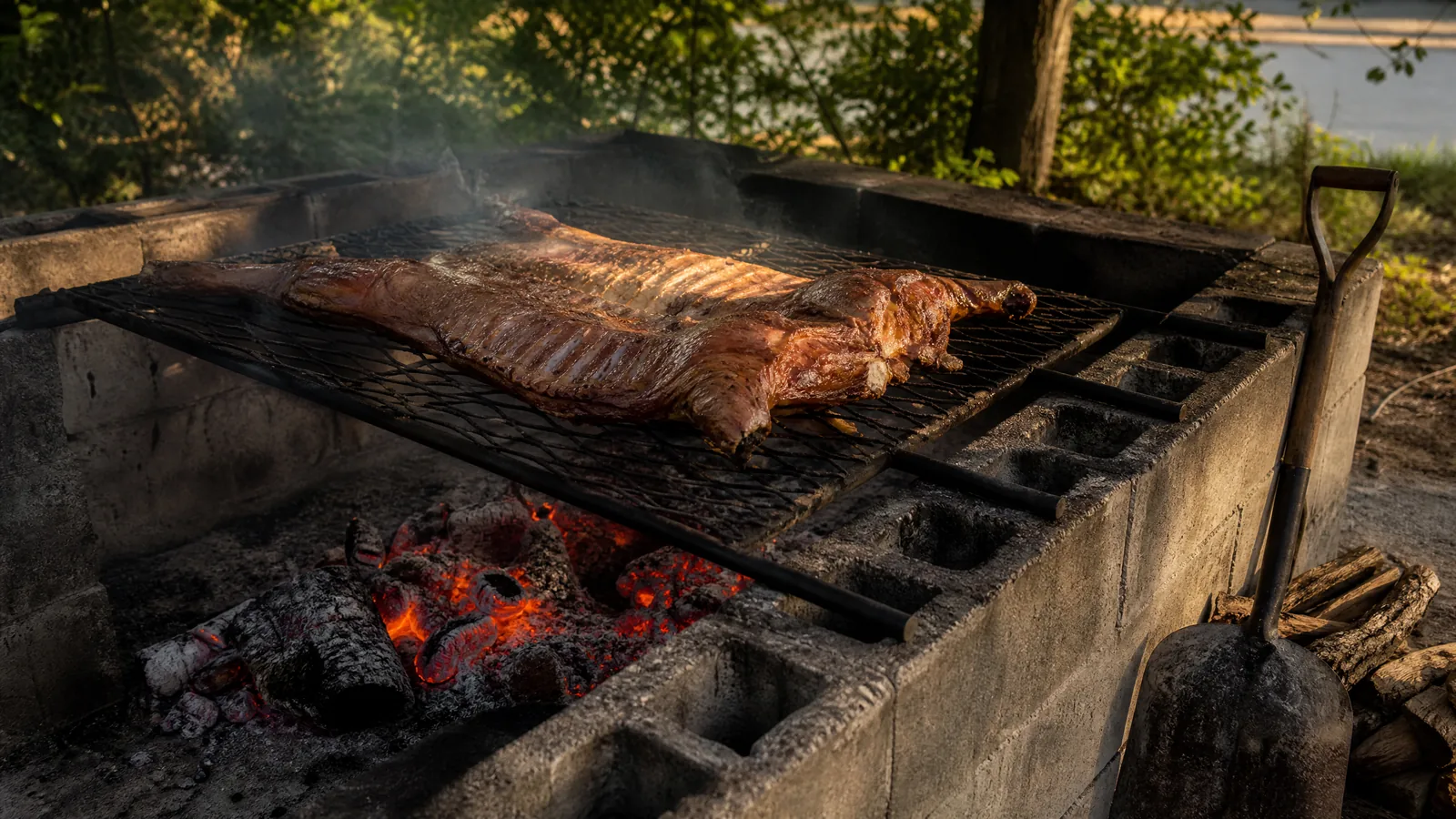
If you order only one style on your first pass, make it whole hog. Carolina barbecue is built around cooking the animal slowly, then pulling and chopping meat from different sections together so leaner and richer pieces share the same tray. That mix is the point: shoulder gives body, fattier sections bring moisture, and bits from around the hog add texture. It tastes less like a single cut and more like a complete roast translated through smoke. For a national frame of reference, the four great styles of American barbecue shows why the Carolinas feel so different from brisket-first Texas or sauce-heavy Kansas City.
Taste the sauces side by side
Charleston sits close enough to multiple Carolina traditions that sauce becomes part of the education. Vinegar-pepper sauce is thin, sharp, and built to cut through pork rather than blanket it. South Carolina’s mustard sauce adds tang, sweetness, and a distinctive golden color while staying looser than the thick bottled sauces common elsewhere. Try both before deciding which you prefer. Our guide to mustard-sauce barbecue in Charleston is a useful next stop once you know the baseline. The best approach is to add sauce gradually, because good pork should still taste of smoke, rendered fat, and the hog itself.
Do not skip hash and rice
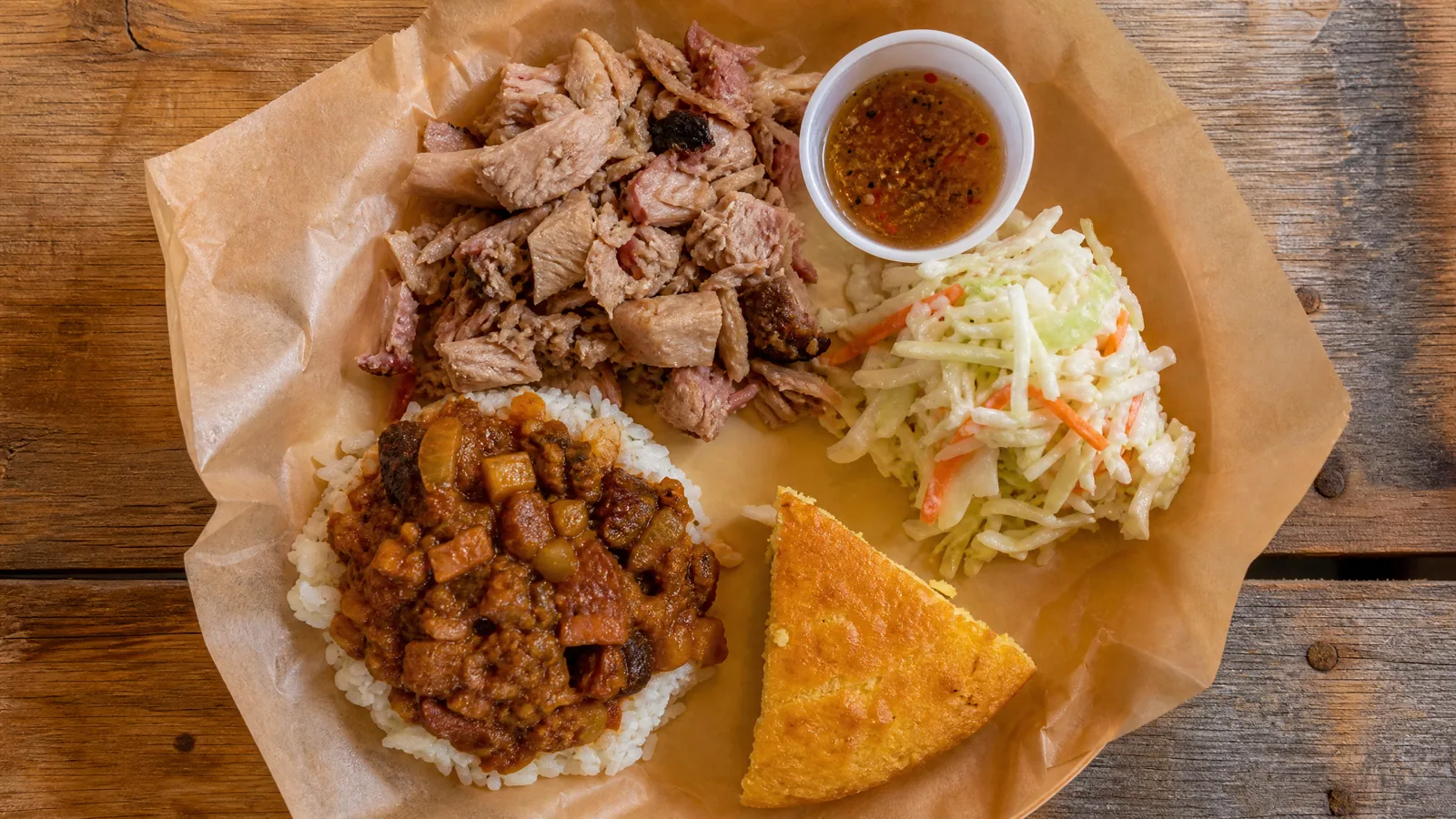
Hash and rice is the side dish that often tells first-timers they are in South Carolina. The exact recipe varies from kitchen to kitchen, but the core idea is a rich, slow-cooked meat gravy spooned over plain rice. It can be savory, peppery, slightly sweet, or deeply porky depending on the pit. Order a small portion alongside chopped pork rather than treating it as an afterthought. It gives the plate another texture and another expression of the same whole-animal cooking culture that defines the region. Pair it with a serving of pulled pork and a few bites dressed differently to understand how smoke, sauce, and gravy interact.
Make Rodney Scott's one of your anchors
For an in-city introduction, Rodney Scott's BBQ is an obvious anchor because whole hog is central to the experience. Order enough pork to taste it plain first, then add vinegar-pepper sauce and mustard sauce in separate bites. That simple sequence teaches more than chasing a giant sampler. If you are staying near the peninsula, use the Downtown Charleston area guide to organize the rest of the day, then save room for another pit later rather than turning the first meal into an endurance test. Charleston barbecue is easier to understand across two or three focused stops than one overloaded tray.
Use the second stop for contrast
Your second meal should show you that Charleston barbecue is not a museum piece. Lewis Barbecue brings a Texas-influenced smokehouse vocabulary to the city, while Home Team BBQ offers another contemporary angle in a more casual setting. Neither replaces the Carolina lesson; they sharpen it by contrast. Once you have tasted whole hog and thin sauces, brisket, ribs, and modern smokehouse cooking make more sense as part of Charleston’s current barbecue landscape. Use that contrast deliberately: compare how a sliced beef plate carries smoke and seasoning against chopped pork dressed with a thin sauce. If your trip reaches beyond downtown, Mount Pleasant and West Ashley also give you reasons to leave the peninsula and see how Charleston’s barbecue culture spreads across the metro rather than concentrating in one tourist corridor.
In the Lowcountry, the best first plate is the one that teaches you what to order next.
A simple first-timer's order
Keep the first order disciplined: chopped or pulled whole-hog pork, a small scoop of hash and rice if available, one traditional side, and both sauce styles on the side. Taste the pork naked, then with vinegar-pepper, then with mustard. At the next stop, change one variable — try a different pit, a different sauce balance, or a different cut. That method turns a barbecue crawl into a tasting lesson instead of a checklist. Start with the full Charleston BBQ guide, then build the day around two strong meals and enough time between them to stay hungry. Water or unsweetened tea also makes a better tasting companion than a heavily flavored drink when you are trying to notice differences between sauces. And leave a little room at the end: the most useful final bite is often a return to plain pork, after your palate knows what each condiment contributes.
Explore more on the Atlas
- Charleston BBQ guideEvery pit, area, and dish we cover in Charleston.
- Best whole hog in CharlestonWhere to taste the Lowcountry's defining barbecue tradition.
- Best mustard-sauce BBQ in CharlestonA guide to South Carolina's golden, tangy sauce tradition.
- The four great styles of American barbecueWhere Carolina barbecue fits on the national map.
- BBQ in West AshleyExplore barbecue beyond the Charleston peninsula.
The best BBQ in America, in your inbox
New pit reviews, city guides, and road-trip routes across the BBQ belt — sent when they matter, never spam.
Yes, email me BBQ Atlas updates. I can unsubscribe anytime via the link in every email.