Memphis BBQ, Explained: Ribs Dry or Wet, and the Pork Sandwich
A pork-first barbecue tradition built on hickory smoke, seasoned ribs, sauced ribs, and the slaw-topped shoulder sandwich.
AIAI-assisted article, reviewed by the BBQ Atlas editorial team.
Pork is the center of the Memphis plate
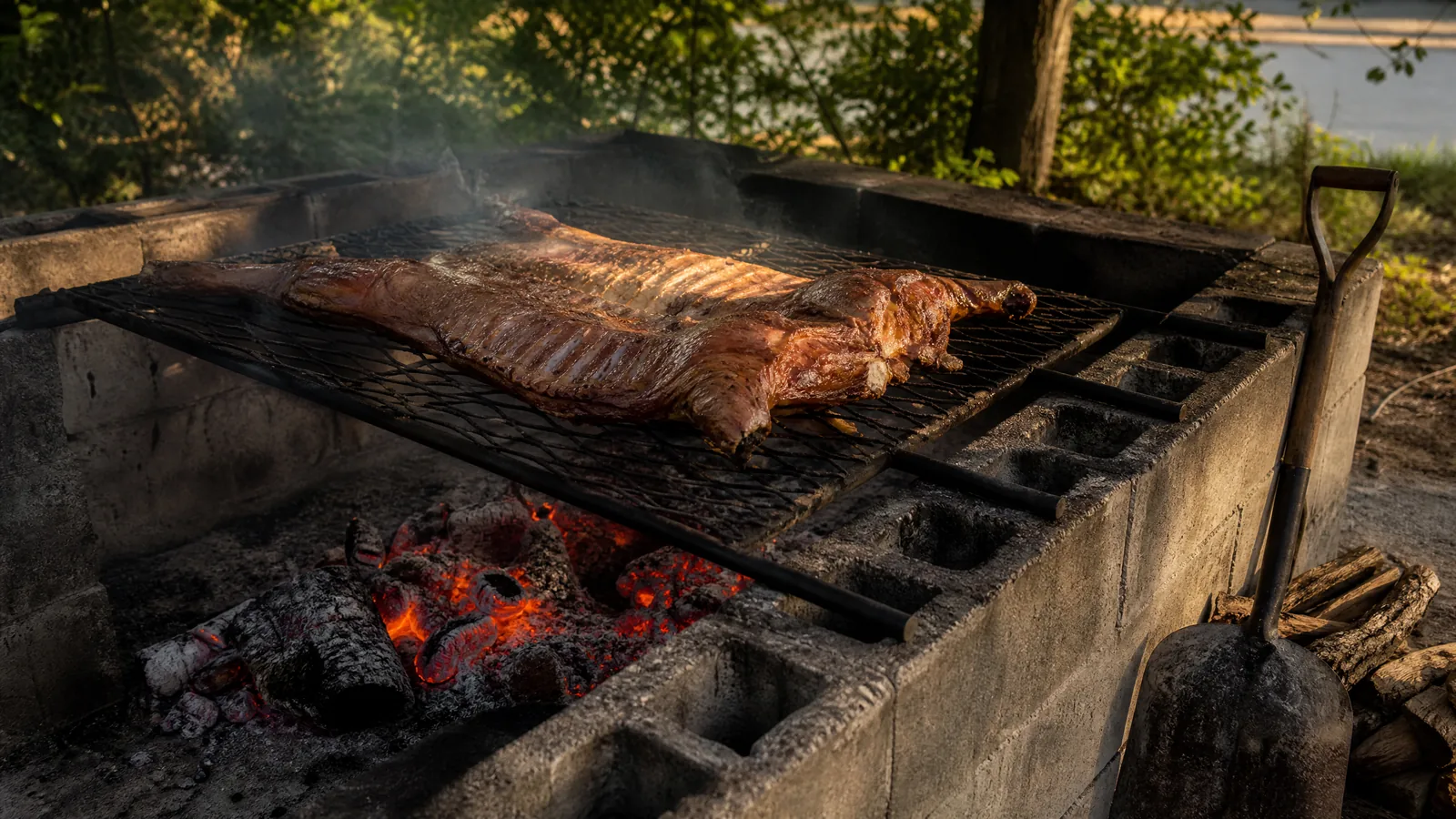
The easiest way to understand Memphis barbecue is to start with the animal. This is pork country, and the city’s defining dishes come from ribs and shoulder rather than brisket. A typical tour quickly moves between dry-rub ribs, sauced ribs, and pulled pork, with each showing a different way to balance smoke, seasoning, fat, and texture. The full Memphis BBQ guide maps the major pits, but the style itself is simpler than the menu suggests: smoke the pork patiently, season it assertively, and decide whether the finish should stay dry or turn saucy.
Dry ribs: seasoning becomes the crust
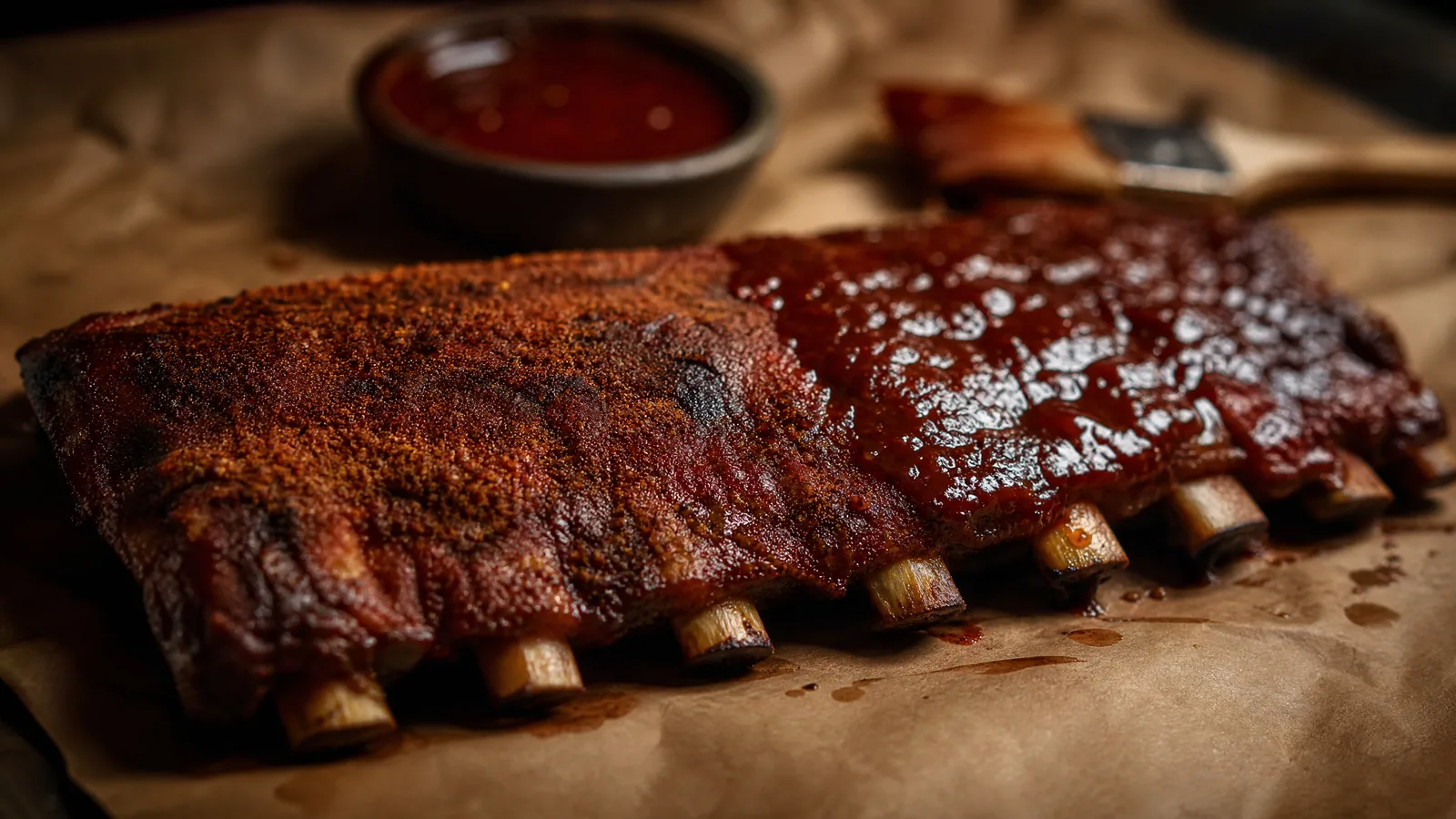
Dry ribs are the city’s most recognizable statement. Instead of relying on a lacquer of sauce, the rack is cooked with a seasoned exterior that builds a savory, aromatic crust as the pork renders over smoke. At Charlie Vergos' Rendezvous, the dry-rib tradition is part of the identity of downtown Memphis barbecue. The point is not that dry ribs are literally dry; a good rack still carries rendered fat and moisture. The distinction is about the finish. The diner tastes pork, smoke, salt, spice, and bark without a sweet coating sitting between the meat and the palate. That makes dry ribs especially revealing: there is less sauce to hide uneven seasoning or a weak smoke profile. The rub has to complement the meat rather than overpower it, and the surface needs enough texture to make each bite feel seasoned from edge to bone.
Wet ribs: sauce becomes part of the cook
The other side of the debate is the wet rib. Here sauce is not merely something placed on the table after the fact. It becomes part of the final texture, brushed onto the ribs so heat tightens it into a glossy layer that clings to the surface. That creates a different balance: smoke underneath, pork in the center, and tangy-sweet richness on the outside. The Bar-B-Q Shop is a useful stop for understanding how Memphis handles that sauced side of the tradition. Dry versus wet is less a question of authenticity than preference; both belong to the city’s barbecue vocabulary. For a first taste of Memphis, ordering both styles side by side is useful because the contrast explains the regional logic better than any definition. One rack foregrounds spice and smoke; the other shows how sauce can become another cooked layer rather than a condiment poured on at the end.
The shoulder sandwich completes the style
Ribs get the headlines, but the pork-shoulder sandwich may be the most practical expression of Memphis barbecue. Shoulder is smoked until it can be pulled into tender strands, then piled onto a bun and commonly topped with slaw. The slaw matters because it changes the bite: cool cabbage, acidity, and crunch cut through smoky pork and sauce. At Central BBQ, pulled pork sits comfortably alongside the rib traditions that define the city. The result feels less ceremonial than a rack of ribs and more like an everyday Memphis meal — portable, layered, and built to deliver smoke, fat, sweetness, tang, and crunch in one bite.
Why hickory matters
Hickory gives Memphis barbecue its backbone. Pork can handle a firm smoke presence, and hickory brings a robust, familiar aroma that stands up to spice rubs and sauce alike. The best examples do not taste like raw smoke; the wood supports the meat rather than masking it. That balance becomes especially clear around Downtown and Beale Street, where barbecue is woven into the city’s broader food-and-nightlife identity. Whether a rack arrives dry or wet, the smoke should still register as a foundational flavor rather than an afterthought.
In Memphis, the argument is not whether to eat pork. It is what to put on the ribs when they are done.
Where Memphis sits on the American barbecue map
Memphis makes the most sense when placed between the other major traditions. Central Texas strips barbecue toward beef, salt, pepper, and smoke, often keeping sauce secondary. The Carolinas lean harder into pork traditions, especially chopped or pulled meat dressed with thinner, sharper sauces. Memphis shares Texas’s interest in letting smoke and meat remain visible, but its defining animal is pork. It shares the Carolinas’ love of pork shoulder, but gives ribs a much larger role and is comfortable with a sweeter, thicker finish. Our guide to the four great styles of American barbecue puts those contrasts side by side. The Memphis logic is not one rigid formula; it is a family of pork preparations held together by hickory smoke, bold seasoning, and the choice between spice crust, sauce, or both.
Explore more on the Atlas
- Memphis BBQ guideEvery pit, area, and signature dish we cover in Memphis.
- Dry-rub ribs in MemphisThe spice-crusted side of the city’s rib tradition.
- Wet ribs in MemphisSauced racks and the sticky side of the debate.
- Pulled pork in MemphisSmoked shoulder and the classic sandwich format.
- The four great styles of American barbecueHow Memphis compares with Texas, Kansas City, and the Carolinas.
The best BBQ in America, in your inbox
New pit reviews, city guides, and road-trip routes across the BBQ belt — sent when they matter, never spam.
Yes, email me BBQ Atlas updates. I can unsubscribe anytime via the link in every email.